
Abigail's Party - you can cut the tension with a cheese and pineapple stick

★★★★
Nobody throws at-home soirées quite like they used to.
Certainly not like they did in the 1970s. It’s probably to do with the fact that nobody is quite as neighbourly. And the fact that the records we have to listen to and share are no longer as good as those setting the scene in the pre-show playlist of the Bee Gees, Elton John, and Kiki Dee.
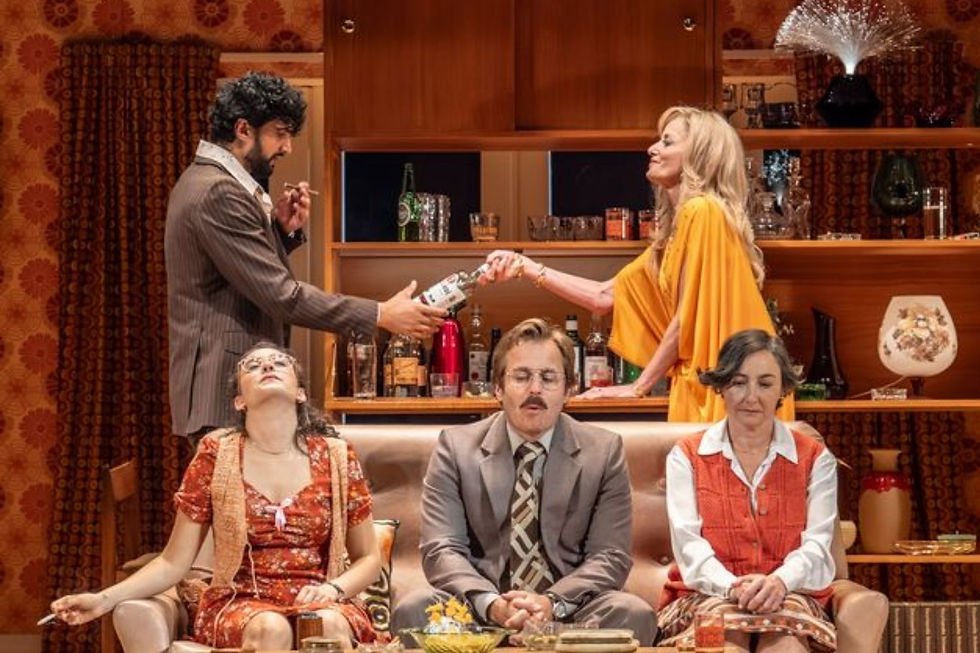
In Mike Leigh's seminal play, which is becoming something of a period piece, audiences are invited into the home of married but disgruntled couple Beverly and Lawrence’s. He's still grafting as an estate agent to pay for her blonde blow-dries and modern mid-century furniture; she's drowning in boredom, invested in the minute dramas unfolding on the street. Here, the drink bar is well stocked. Still, the conversation stilted when guests - new young couple, people-pleasing Angela (a shrill Lauren Patel), nonchalant yet handsome Tony (Omar Malik), and awkward Sue (Pandora Colin), whose teenage daughter Abigail is throwing a house party slowly getting out of hand - arrive.
Tamzin Outhwaite does a cracking job at playing at being the hostess with the most-est. She practically floats in her glamorous boho orange dress, her silhouette like that of Stevie Nicks, arms raised above her head as she saunters in silver platform heels, leaving a trail of cigarette smoke in her wake. In her Essex sing-song, she calls out to her guests using unauthorised nicknames, topping up gin and tonics, her tone flirtatious and her swagger slightly devious as she doles out sticks plucked from the cheese and pineapple hedgehog. As Lawrence, Kevin Bishop grows more and more irritated with his wife's behaviour, seeking out conversation about art and mock Tudor homes, desperate for some calm.
As the events unfold in the kitsch orange-toned living room - designed by Peter Mckintosh with G Plan furniture, a three-piece leather suite, and colour-changing fibre optic lamp - tensions rise like the volume of the records. The dulcet tones of Elvis Presley collide with the squirm of Demis Roussos as Bev parades around, a cat on heat after the attention of the bored Tony. Nadia Fall's direction with excellent performances highlights the comic brilliance of single phrases like "ta" and "come through", landing Leigh's intended farce and polite Britishness. There's great work from movement director James Cousins, too, who has choreographed individual falls to the sofa and dances on the rug.
The script remains as pointed as polite conversation begins to unravel, leading the way to probing questions about divorce, violence, race, and class. It forces awkwardness, lingers just a beat too long, and slowly Bev's perfect night begins to unravel. But each character gives clues to the tragic ending, should you be paying close enough attention. It's the stuff of suburban nightmares and equally as sobering.


Comments